

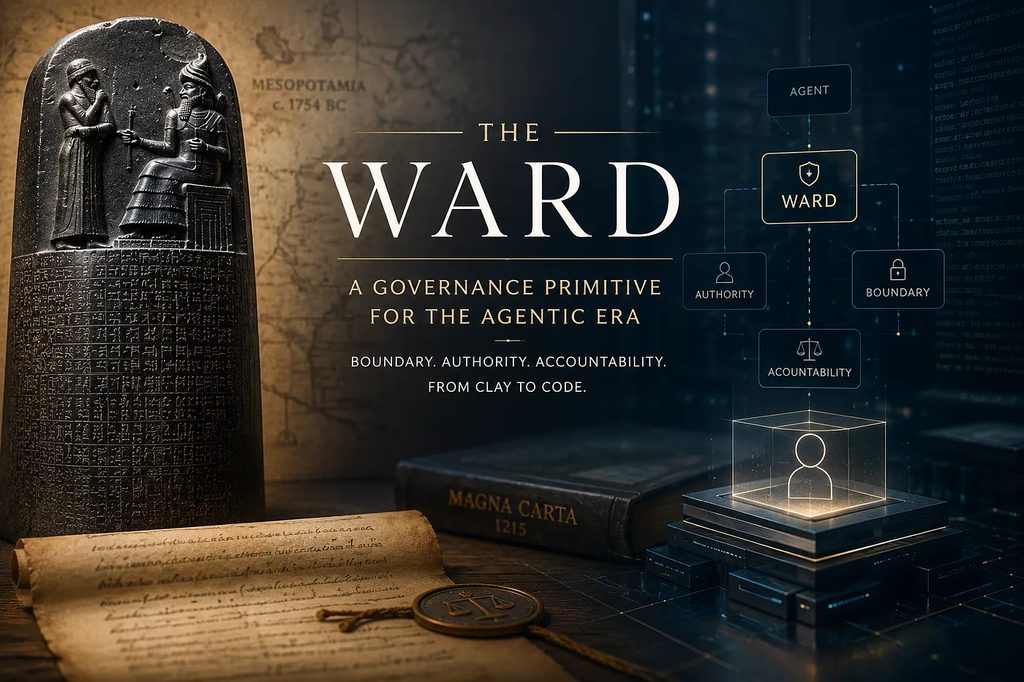
Before contracts, there were wards
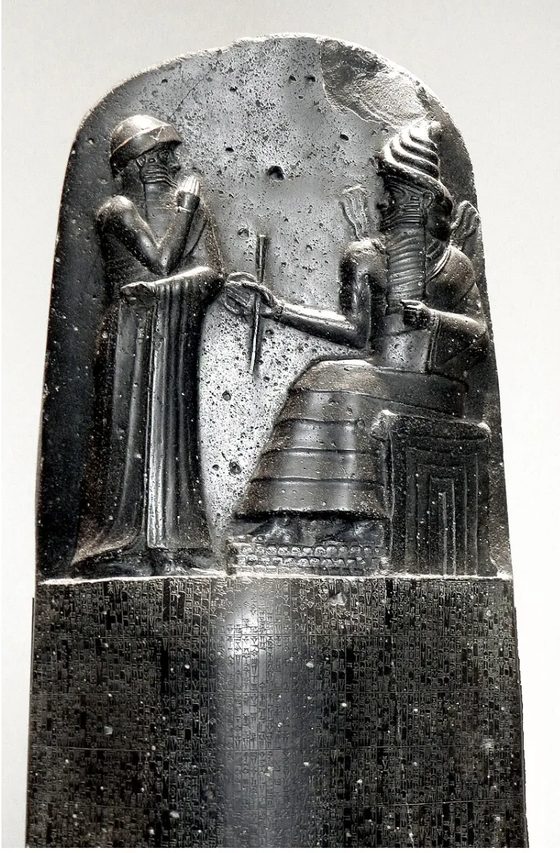
Somewhere in Mesopotamia, around 1754 BC, a scribe pressed a stylus into wet clay and recorded one of humanity's earliest codified governance instruments: the Code of Hammurabi. Within its 282 laws, the Code contained a sophisticated answer to a problem every human society has faced: what happens to property, authority, and consequences when the person who holds them is unable to act?
Laws 177 through 184 addressed the protection of widows and orphans with remarkable precision. A guardian was appointed to hold property in trust for those who could not hold it themselves. The Akkadian word was apilum: one who answers, one who is responsible. The guardian could not alienate the ward's property for personal gain. The guardian was accountable. The consequence of mismanagement returned to the guardian, not to the ward. The boundary between the guardian's authority and the ward's interests was defined, enforced, and recorded in clay.
Thirty-eight centuries later, we are building autonomous systems that act in the world with consequences more immediate, more consequential, and more irreversible than anything a Babylonian guardian ever managed. And we have, as yet, no coherent answer to the same question Hammurabi's scribes were already solving: when a consequential action occurs, where does the chain of authority and accountability begin?
The answer has been available for almost four thousand years. It was never lost. It was simply never ported.
The word is older than the law
Before there were contracts, there were wards. Before title deeds, before notaries, before registered land and digital certificates of ownership, human societies had already solved the foundational problem of governance: how do you create a bounded space within which authority is defined, actions are structured, and consequences are attributed to a human origin? You build a ward.
The Ward is not a new idea borrowed from law and applied to autonomous systems. It is the instrument that the law has always reached for when authority needed to be bounded, attributed, and enforced. The word is older than the common law that eventually formalized it: its root is the Proto-Indo-European wer- ("to perceive, to watch out for"), shared across Sanskrit, Latin, and every Germanic tongue.1 From that root came the Proto-Germanic wardaz, "one who guards," which gave Old English its weard: watch, guard, protection.
Roman law developed the most sophisticated framework for bounded authority over persons and property in the ancient world. Justinian's Institutes of 533 AD distinguished between tutela, guardianship of those who lacked capacity by nature, and cura, guardianship of those who lacked capacity by circumstance. In both cases the governing principle was identical: the tutor or curator held authority not as an owner but as a steward, bounded by the ward's interests, with personal liability for any excess. The guardian does not own what they govern. They answer for it.
In English legal doctrine, weard appears in the law codes of Æthelberht of Kent, dating to approximately 602 CE, among the oldest written laws in the English language.2 By Magna Carta in 1215, wardship was not a new institution being invented but an existing one being regulated. Chapter 4 struck at the heart of the abuse: the guardian could take from the ward's land nothing but reasonable produce, without destruction or waste. Chapter 5 went further: the guardian was required to hand back the estate at the end of the minority in the same condition as received.3 These provisions did not eliminate wardship. They constitutionalized it. When Henry VIII established the Court of Wards and Liveries in 1540, he formalized a governance architecture that had been in place for nearly a millennium.4
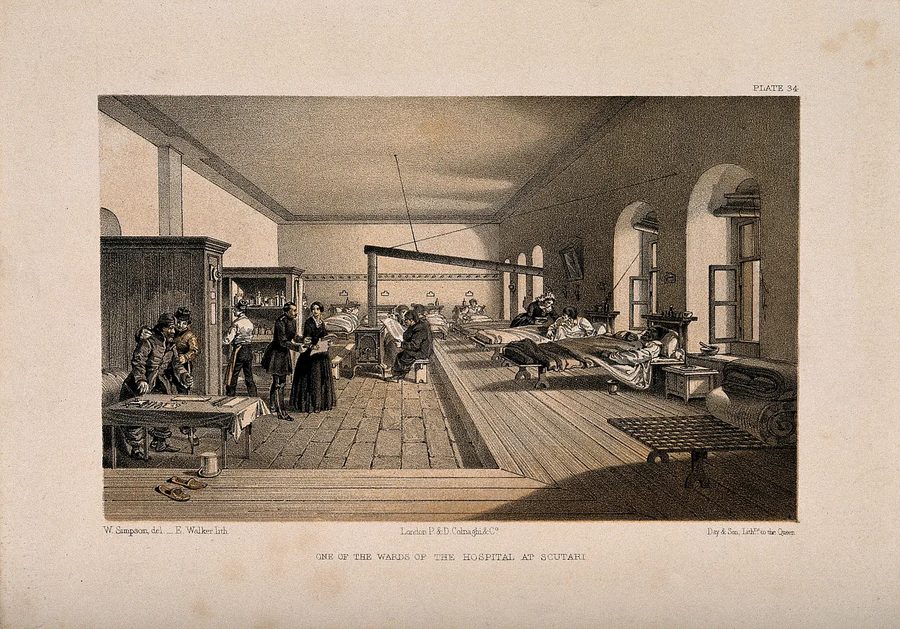
A ward is whatever is under watch: the hospital ward, the electoral ward, the prison ward, the ward of court, the warden, the warrant, the warder at the gate. These are not coincidental word choices. They are a single governance architecture, expressed across five thousand years of human institutional design, in which a bounded domain is constituted by a human act, governed by defined authority, and held accountable to a human origin.
The root carries a dual meaning that is the architecture in miniature. In Old English and Proto-Germanic, ward means both to guard or protect and to move in a direction. You watch toward something to protect yourself from it; the direction of attention is the mechanism of protection. Every directional compound in the Ward family carries an implicit intentionality: forward, inward, outward, onward, toward. Wayward is the negative case, movement without watchfulness. Froward is the adversarial case, movement actively contrary to the governance direction.
The family extends into roles. The steward is stigweard, the ward of the hall: delegated authority managing a domain on the owner's behalf, bearing accountability but not owning it. The guardian is the duty-bearing protector of a ward's interests. The warden is the enforcer at the boundary.5 The warrant is the sanctioned conveyance, the instrument that makes a specific directed act authorized rather than merely possible. No other word in the English legal tradition does this much work from a single root. That is not an accident of linguistic history. It is the reason the word survived.
Property law did not invent this architecture. It inherited it, and in inheriting it, gave us the most precise vocabulary we have for describing how authority works: who originates it, how it is conveyed, under what conditions it may be exercised, and who bears the consequences when it produces effect in the world. We are about to need that vocabulary again. Not for land. For machines.
The kernel: the grant, the chain, the conveyance moment
Property law rests on a single foundational concept: the grant. A grant is a voluntary human act that conveys a defined right from a grantor to another party. The grantor must have capacity. The grant must be intentional and bounded. And the grant must be attributable: the chain of title must run, unbroken, from the current holder of a right back to the original sovereign act that created it.
Without a grantor, there is no valid instrument. Without an instrument, there is no conveyance. Without a chain of title, there is no enforceable right. This is not merely a technical requirement of the land registry system. It is a moral claim about how authority works: that the right to act in the world, to produce consequences that affect others, must trace to a deliberate human act. Not to possession. Not to capability. Not to force. To an act of governance performed by someone with the capacity and the standing to perform it.
Property law also gave us the Conveyance Moment: the principle that the validity of a transfer is evaluated at the instant of conveyance, not at the moment the consequence lands. The deed is executed; the right passes; the transfer is complete. What comes after is evidence, not authority. Authority precedes evidence.
In the property law tradition, the Ward is the bounded domain within which governance applies, and the governance actor whose act constitutes that domain. The warden watches over the ward. The warrant is the instrument that conveys a specific, bounded right within it, activated under defined conditions, and consumed immediately upon exercise.6 The warrant cannot exceed the terms of the grant. The warden cannot exceed the terms of the wardenship. And every action that produces a consequence within the domain is either authorized by the governance framework or it is not. There is no ungoverned middle ground.
An agent decides
An autonomous agent acting in the world is not a passive instrument. A hammer does not decide to strike. A spreadsheet does not decide to transfer funds. An agent decides. It evaluates. It proposes. It acts. And when it acts, it produces consequences in the world that may be irreversible, consequential, and safety-critical.
The question that every regulatory framework, every enterprise governance team, and every institution deploying AI is now struggling to answer is not a technical one. It is the same question property law answered a thousand years ago: when a consequential action occurs, where does the chain of accountability begin? The answer requires two things that are not the same, though they are routinely conflated: legitimacy, a governance framework that is properly constituted, authorized, and scoped, and accountability, an identifiable, legally bindable party who answers for the exercise of that governance function.
Current AI architectures have no coherent answer to either question. The chain terminates at a system, a model, a credential, or a session token. None of those can bear consequence in any meaningful legal or moral sense. The deeper failure is architectural: current systems use the instrument of identity to carry out the work that belongs to the instrument of authority. Knowing who a party is does not establish that they are authorized to take a specific action at a specific moment. Conflating the two creates the appearance of accountability without the substance.
The incumbent governance model was built for human actors, operating synchronously, within known perimeters, authenticating once and then acting within the permissions that authentication conferred. None of those conditions holds for autonomous execution.
This is not only an observation from inside the architecture. Researchers mapping the EU AI Act compliance landscape from a purely regulatory direction, with no connection to this work, have independently arrived at the same structural conclusion. Nannini et al.7 identify three existing tiers of AI governance tooling, none of which addresses the question agentic systems make operationally urgent, and conclude that a fourth tier is absent: infrastructure capable of classifying individual actions against a structured ontology, routing to the accountable stakeholder, and maintaining an immutable record of human authority exercise. This architecture reaches the same conclusion from five thousand years of property law. The vocabulary is different. The absent fourth tier is the Ward.
The four configurations
The Ward is not a single thing. It is a governance primitive that manifests in four configurations, each of which maps to an existing human institution we already understand and trust.
- Individual Ward, Direct Author
- The foundational case. A living human creates a bounded governance domain through a confirmed act of presence, and is simultaneously the sovereign, the author, and the bearer of consequence. There is no intermediate layer through which accountability might diffuse. This is the surgeon who scrubs in and accepts the governance framework of the surgical theatre, the pilot who takes command of the cockpit, the returning officer who opens a polling station.
- Individual Ward, Delegated Authority
- The same foundational case, extended. The Ward designates Governors: governance actors formally recognized by the Ward and authorized to author governance instruments within a defined delegation scope. The critical property of this configuration is what does not transfer: consequence. The Governor authorizes instruments; the Ward bears the consequence of everything that occurs under them. This is the legal principle of the power of attorney made structural, or the airline that designates its maintenance authority as a Governor for specific classes of action.
- Institutional Ward
- The Ward is not an individual but a body: a corporation, a regulatory authority, a professional institution. The institution's foundational governance documents are the primary instruments; individual humans within the institution act as Governors, authoring secondary instruments within the bounds the institution has defined. The chain still runs to a human. It is simply longer.
- Protected Space as Ward
- The domain is primary: the hospital ward, the electoral ward, the courtroom, the cockpit, the clean room. Entry is the trigger. The governance framework pre-exists the actors within it; they do not create it by entering, they accept it and operate within it. This is the configuration most human beings inhabit every day without naming it. You have always understood this. You never needed it explained. The governance primitive is that deep in human institutional intuition.
The three constants
Across all four configurations, three things are constant. They are not design choices. They are the invariants that define what a Ward is.
- The domain has a boundary. Nothing that happens inside it is ungoverned, and nothing that crosses the boundary does so without authorization. The boundary is a sovereignty perimeter, not a firewall.
- The authority traces to a human act. A Ward that no human constituted is not a Ward. It is an ungoverned space with governance language applied to it from the outside, which is exactly what most AI deployments look like today.
- The consequence is attributed. The Ward is the party whose interests the governance framework exists to protect, and upon whom the consequences of its actions land. There is always an answer, and it runs back through the chain to a human, or a body of humans, not a system, a model, or a session token.
The trust established in English equity was what four thousand years of governance doctrine had been converging toward: a formal architecture in which authority and consequence are separated, the holder of authority is constrained by the interests of the person for whom it is held, and the boundary between warranted and unwarranted action is legally cognizable and enforceable. This is the Ward. Not as a metaphor. As legal doctrine.
The instrument and the chain
Property law gave us a vocabulary for the artifacts that flow from a Ward's governance act.
- Authority Policy
- The instrument: the deed, the license, the covenant. A bounded, conditional grant of the right to act within a defined domain, authored by a party with the standing to make that grant. The Ward authors it directly, or the Governor authors it within a delegated scope; either way it is attributed to the Ward.
- Warrant
- The conveyance: a specific, time-bounded, single-consumption transfer of a defined right to produce a defined effect. Not a standing entitlement. It activates authority at the moment of execution and exhausts it immediately upon exercise, leaving no residual permission that can accumulate, persist, or be replayed.
- Receipt
- The record of title: not a log, but the evidence that a specific action occurred under a specific Warrant, on behalf of a specific Ward, within the terms of the governance framework. It closes the authority loop.
- Warden
- The enforcer at the execution boundary: the entity that evaluates whether a proposed action satisfies the governance conditions defined by the Ward before permitting it to produce effect.
The exhaustibility principle has constitutional roots. The Statute of Marlborough of 1267 established that a guardian who committed waste against a ward's estate was liable for three times the damage caused: authority exists for a defined purpose, and any exercise beyond those bounds is a wrong for which the person who committed it bears personal consequence. Entick v Carrington (1765) restated this for warrants specifically: a general warrant authorizing a search without naming its specific object was void. The warrant that authorizes one act does not authorize another.8
Authority precedes attribution
The four instruments have a strict sequence. It is not a design preference. It is an invariant: authority must always precede attribution.
Authority answers the question: was this action within the sanctioned scope, on behalf of a named Ward, under defined conditions, at this moment? The Warrant is the instrument of authority, consumed at execution time; the governance question is closed. Attribution answers a different question: who performed this action, and who must answer for its consequences? The Receipt is the record from which attribution is read, and it exists because the Warrant existed first.
These are not simultaneous questions. They are sequential. You cannot meaningfully ask who must answer for an action until you have first established that the action was either within or outside the bounds of what was sanctioned. In machine-to-machine execution where no human Principal needs to be identified, the authority loop is complete with the Warrant and the Receipt alone. Authority without attribution is a valid governance state.
The human at the root
A Ward cannot be constituted by a machine. Not because a rule forbids it, but because the act of Ward creation requires something a machine cannot provide: confirmed human presence. Not identity. Not a credential or a session token. The presence of a living body, acting deliberately, at this moment, in contact with the instrument that will create the Ward.
Every digital governance system ever built has asked: who are you? It is the wrong question for this purpose. Identity is what you are. Presence is that you are. The Ward architecture asks the presence question, not the identity question, at the moment of creation. What confirms presence is the body itself: the irreducible biological fact of a living human in contact with the hardware at the moment of Ward creation. A machine cannot be present in this sense, which means a machine cannot create a Ward.
The chain of authority that flows from every Ward, every Warrant, every authorized action, every attributed consequence, begins with a living human. Not by rule. By design. A machine can only act on behalf of a Ward created by a human. That is the boundary. And it is not a constraint on what AI can do in a governed world. It is the condition under which AI agents can be trusted to do anything consequential.
The vocabulary was always the architecture
The Proto-Indo-European speakers who first inflected the root wer- into a word for watchfulness were not designing a legal system. They were describing a basic human act: one person taking responsibility for a bounded space, holding it, watching over it, and being accountable for what happened within it.
From that act came every governance institution we have built. The Anglo-Saxon warden watched the boundary of a settlement. The feudal lord accepted wardship of an heir's estate. The Magna Carta barons demanded that wardship be governed by law rather than by the king's pleasure. The common law absorbed and distributed it across the legal landscape, into the hospitals, polling stations, courtrooms, and cockpits that carry the word and the architecture into daily life today.
The architecture was never designed for machines. It did not need to be, because for five thousand years, machines were not sovereign actors. That has changed. And the response does not require a new governance philosophy. It requires applying the oldest one we have.
References
- Harper, D. (2001–2026). Ward. Online Etymology Dictionary. The Proto-Indo-European root wer- underlies not only the Germanic ward family but also Latin versus and Sanskrit vártate, demonstrating its presence across the Indo-European language family from approximately 3000 BCE.
- Oliver, Lisi (Ed.). (2002). The Beginnings of English Law. Toronto Medieval Texts and Translations, 14. University of Toronto Press. The laws of Æthelberht of Kent (c. 602 CE) treat concepts of watch, custody, and bounded governance as established customary law.
- Magna Carta (1215), chapters 3, 4, and 5. Chapter 4 prohibited destruction or waste of the ward's estate; Chapter 5 required its return intact at majority.
- Van Caenegem, R. C. (1988). The Birth of the English Common Law (2nd ed.). Cambridge University Press.
- Harper, D. (2001–2026). Warden. Online Etymology Dictionary. Old English weardian ("to keep guard, watch, protect, preserve") from Proto-Germanic wardon, the verbal form of the same root as ward.
- Harper, D. (2001–2026). Warrant. Online Etymology Dictionary. The word enters English around c. 1200 as warant, from Old North French, ultimately from the same Proto-Indo-European root as ward.
- Nannini, L., Smith, A. L., Maggini, M. J., Panai, E., Feliciano, S., Tiulkanov, A., Maran, E., Gealy, J., and Bisconti, P. (2026). AI Agents Under EU Law: A Compliance Architecture for AI Providers. arXiv:2604.04604. Section 9(10) identifies the absence of action-level authority governance infrastructure as both a market gap and a compliance gap under Articles 12–14 of the EU AI Act.
- Briggs-McGinnis, R. (2025). Two Ancient Roman Plates: Bronze Military Diplomas and Other Sealed Documents. L. Tom Perry Special Collections, Brigham Young University. Documents the Babylonian sealed clay tablet system from c. 2000 BCE as the functional precursor to the modern warrant.